

Understanding Neurotypicality and Neurodiversity
In recent years, terms such as neurotypical, neurodivergent, and neurodiversity have become increasingly common. Understanding these concepts helps explain why people think, communicate, and respond to the world in different ways.
What does neurotypical mean?
Neurotypical refers to the way the majority of people’s brains process information, interact with others, and respond to their environment. Neurotypical brain development and functioning align with what society has historically considered “typical” or “standard.” As a result, most social structures—such as schools, workplaces, healthcare systems, and communication norms—are designed with the neurotypical brain in mind.
Because neurotypical ways of thinking and behaving are the majority, they are often treated as the default or expected way to be, even though they represent only one type of brain functioning.
What is neurodiversity?
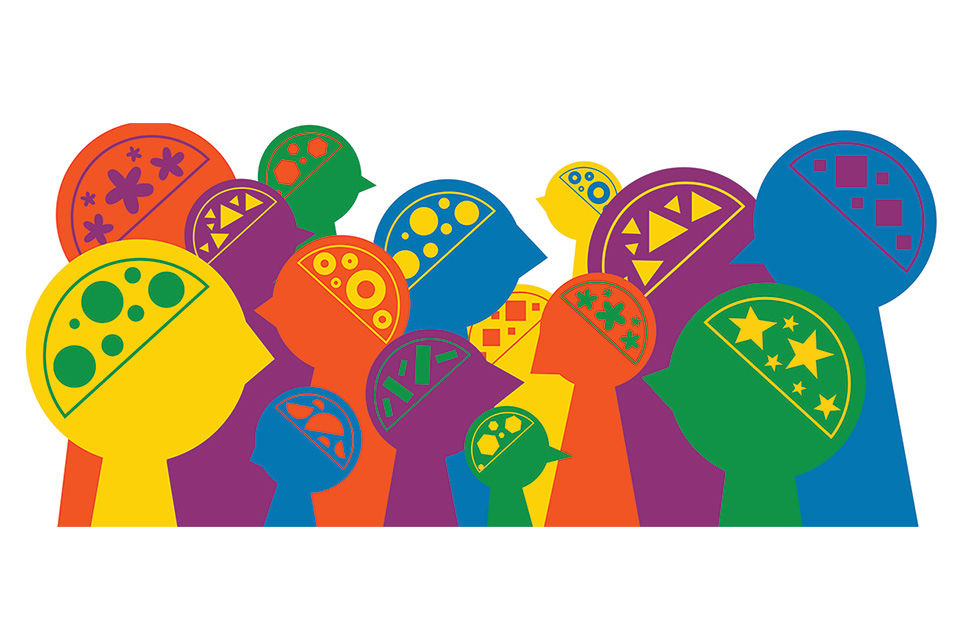
Neurodiversity is the idea that variation in brain function is a natural and normal part of the human population, just like variation in personality, culture, or physical traits. It recognises that while neurotypical brains are the most common, they are not the only valid way for a brain to work.
The concept of neurodiversity emerged in the 1990s through the work and discussions of autistic self-advocates, who were able to connect online and share their experiences. These ideas grew into what is now known as the neurodiversity movement.
Neurotypical and neurodivergent brains
Within the range of human brain functioning, people can be broadly described as either:
- Neurotypical – individuals whose brain development and functioning align with societal norms and expectations.
- Neurodivergent – individuals whose brains function significantly differently from the neurotypical majority, leading to different ways of thinking, learning, communicating, and experiencing the world.
Neurodivergent conditions include autism, ADHD, dyslexia, developmental language disorder (DLD), dyscalculia, and tic disorders, among others.
The neurodiversity movement and neurotypical norms
The neurodiversity movement challenges the long-standing assumption that neurotypical functioning is the ideal or “correct” standard that everyone should strive to meet. Historically, neurodivergent people have often been expected to adapt to neurotypical norms by changing their behaviour, suppressing natural responses, or altering communication styles in order to fit in.
For many neurodivergent individuals, this effort—often called masking—can be exhausting and is associated with increased stress, anxiety, burnout, and other mental health difficulties.
Rather than placing responsibility solely on neurodivergent individuals to conform to neurotypical expectations, a neuro-affirming approach encourages changes to environments, systems, and attitudes so that people with different neurotypes can participate fully and authentically.
Support and inclusion
The neurodiversity movement does not deny that neurodivergent people may experience significant challenges or require support. Instead, it emphasises that support should be collaborative, respectful, and based on individual needs, rather than focused on making people appear more neurotypical.
By recognising neurotypicality as one form of brain functioning—rather than the standard by which all others are judged—society can move toward more inclusive practices that benefit everyone.
Taking a Neuro-Affirming Approach in TACPAC
TACPAC is an intrinsically neuro-affirming approach that recognises neurotypical and neurodivergent people as equally valid and valuable.
Want to know more about Neurodiversity?
Want to know more?
- Therapist Neurodiversity Collective – https://therapistndc.org
- Autism Level Up – https://www.autismlevelup.com
- The Autistic Advocate – https://theautisticadvocate.com
- The Autistic SLT – https://www.autisticslt.com
Neurotypical and Neurodivergent Terminology FAQs
Neurotypical describes people whose neurological development and functioning align with the patterns seen in the majority of the population. In other words, their brains process, learn, communicate, and behave in ways society generally expects and designs for.
Neurodivergent refers to individuals whose neurological functioning differs from neurotypical patterns. These differences are usually present from birth and remain throughout life, although some can arise from trauma or injury.
Neurodivergence is the umbrella term for all neurological profiles that fall outside the neurotypical range. It acknowledges that there are many natural variations in how human brains work and that these variations are not inherently negative.
There is no universally agreed list, but the following conditions are commonly recognised as forms of neurodivergence—meaning they differ from neurotypical functioning:
• Autism
• ADHD
• Auditory Processing Disorder (APD)
• Developmental Language Disorder (DLD)
• Dyscalculia
• Dyslexia
• Dyspraxia / Developmental Coordination Disorder (DCD)
• Speech differences (e.g., stammering, cluttering, apraxia)
• Tic conditions
Because neurodivergence is a social construct, the list may evolve over time and across cultures. Many neurodivergent conditions also co occur.
Neurodiversity refers to the full spectrum of human neurological differences — including both neurotypical and neurodivergent people. It emphasises that:
• No two brains function in exactly the same way.
• Neurological variation is a natural and expected part of humanity.
• Society should value and accommodate all neurotypes, not only those that are neurotypical.
The neurodiversity perspective challenges the idea that neurodivergent people need to be “fixed” to match neurotypical norms. Instead, it encourages environments that support everyone’s needs.
Further Reading

Considering Neurodiversity in our TACPAC sessions
Considering Neurodiversity in our TACPAC sessions What does neuro-affirming mean? Neuro-affirming means in line with the philosophies of the neurodiversity movement, e.g. Treats all people, regardless of their neurotype, as valuable and important. [...]